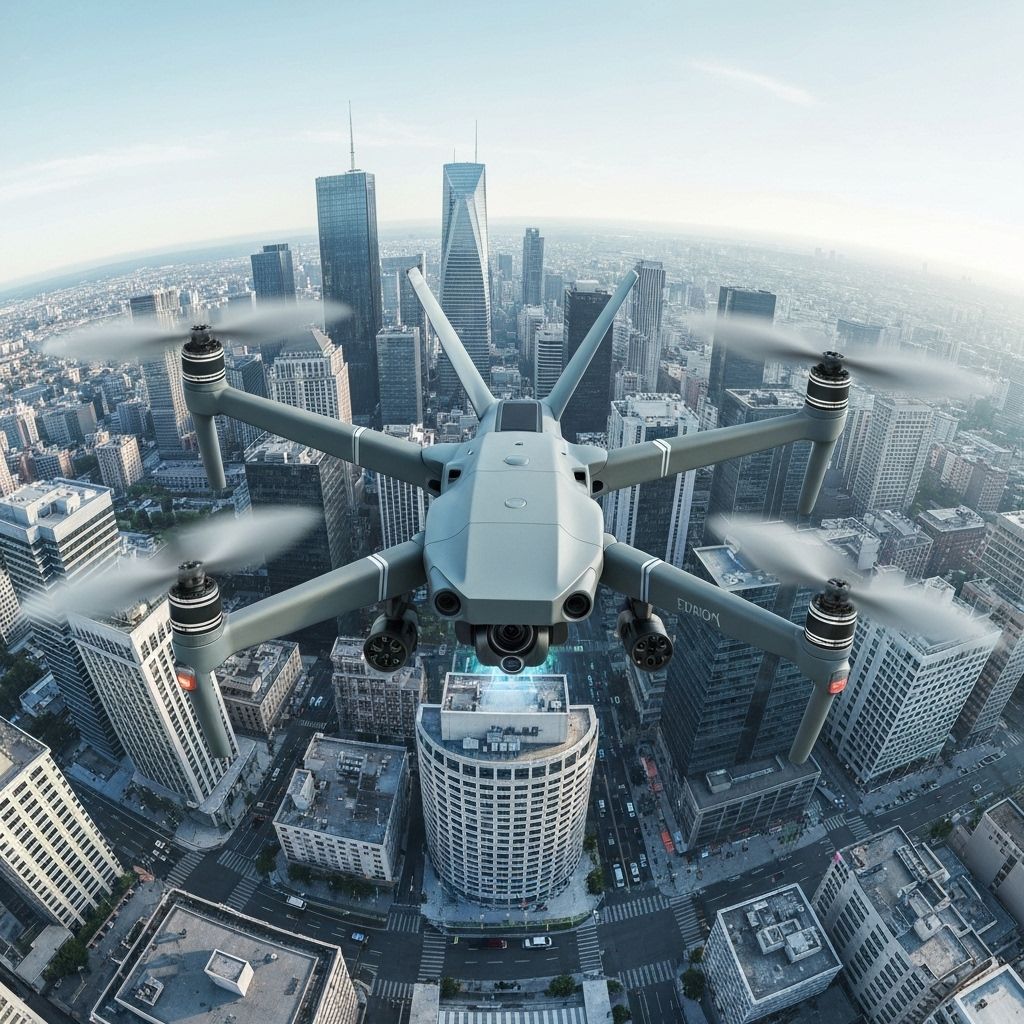
The US Army has awarded a $98.9 million contract to TurbineOne, a defense technology startup, to deploy advanced artificial intelligence software designed to identify and track unmanned aerial vehicles in combat zones and critical infrastructure areas.
The five-year contract represents one of the largest AI-focused defense awards to date and signals the military's accelerating adoption of machine learning technologies to address emerging threats from increasingly sophisticated drone warfare capabilities.
TurbineOne's "SkyGuard" system uses computer vision and machine learning algorithms to distinguish between friendly and hostile unmanned aircraft, even in complex environments with multiple simultaneous aerial objects. The technology can reportedly identify drone signatures from distances exceeding 10 kilometers with 99.2% accuracy.
"The proliferation of commercial and military drones has fundamentally changed the battlefield," explains Colonel Sarah Chen, director of the Army's Emerging Technologies Division. "We need AI systems that can process threats faster than human operators while maintaining the reliability our forces depend on."
Technical Capabilities
The SkyGuard platform integrates with existing radar and sensor networks, using AI to analyze flight patterns, acoustic signatures, and visual characteristics in real-time. Unlike traditional detection systems that rely primarily on radar cross-sections, the AI approach can identify drones that use stealth technology or operate at very low altitudes.
During testing at the Army's Yuma Proving Ground, the system successfully detected and classified over 1,500 different drone types, including modified commercial quadcopters, military reconnaissance drones, and experimental swarm configurations. The AI demonstrated particular effectiveness against so-called "kamikaze drones" that attempt to evade detection through erratic flight patterns.
"What sets our approach apart is the ability to learn and adapt," says Dr. Michael Torres, TurbineOne's Chief Technology Officer and former DARPA researcher. "The system continuously updates its threat recognition models based on new drone designs and tactics, ensuring it stays ahead of evolving threats."
The contract includes provisions for deploying the technology across multiple Army installations, with initial rollouts planned for bases in high-risk regions including Eastern Europe and the Indo-Pacific theater.
Strategic Context
The award comes as military leaders increasingly recognize drone warfare as a defining characteristic of modern conflict. Recent conflicts in Ukraine, Syria, and other regions have demonstrated how relatively inexpensive unmanned systems can pose significant threats to conventional military forces.
Pentagon officials estimate that hostile forces now operate over 50,000 military and dual-use drones globally, with capabilities ranging from basic surveillance to precision strikes. Traditional air defense systems, designed primarily for manned aircraft and missiles, have proven less effective against smaller, more agile unmanned platforms.
"The threat landscape has evolved faster than our defensive capabilities," acknowledges General James Rodriguez, commanding officer of Army Futures Command. "AI-powered detection represents a critical capability gap we need to fill immediately."
The TurbineOne contract is part of a broader $2.3 billion Department of Defense initiative to integrate artificial intelligence across military operations, from logistics and maintenance to combat systems and intelligence analysis.
Industry Impact
TurbineOne, founded in 2019 by former Google and Palantir engineers, has emerged as a leading player in the defense AI sector. The company previously secured smaller contracts with the Air Force and Navy for related technologies, but the Army award represents its largest government engagement to date.
The contract victory positions TurbineOne to compete for additional international sales, as allied nations face similar drone-related security challenges. NATO officials have expressed interest in standardizing AI-powered detection systems across member countries.
"This validates our approach and demonstrates the military's confidence in AI solutions," says Jennifer Walsh, TurbineOne's CEO. "We expect to see accelerated adoption of similar technologies across all service branches and allied partners."
The company plans to use proceeds from the Army contract to expand its engineering team and develop next-generation capabilities, including integration with autonomous response systems that could neutralize detected threats without human intervention.
Privacy and civil liberties advocates have raised concerns about the potential for military AI systems to be adapted for domestic surveillance, though Army officials emphasize that the TurbineOne technology is specifically designed for military applications and overseas deployment.
As drone technology continues advancing rapidly, the success of AI-powered detection systems like SkyGuard may determine whether traditional military forces can maintain tactical advantages in an increasingly automated battlefield environment.